The Story of DVHRT
Fort Collins has an important anniversary to celebrate: DVHRT.
The Domestic Violence High-Risk Team (DVHRT) was first pitched to executive leadership at the Fort Collins Police Services (FCPS) by then Detective Brandon Wootan three years ago, in Spring 2023. It was a high-stakes meeting.
Detective Brandon Wootan explained the concept: DVHRT is a survivor-centered, multi-disciplinary team that responds to the most dangerous cases of intimate partner violence. Using an evidence-based lethality assessment, law enforcement and community partners are able to identify cases with the highest potential for severe harm or fatal outcomes and coordinate a rapid response focused on victim safety, offender accountability, and long-term support. The success of the DVHRT model has been nationally recognized by the Department of Justice and the Office of Violence Against Women – with the critical goal of preventing intimate partner homicides and increasing offender accountability.
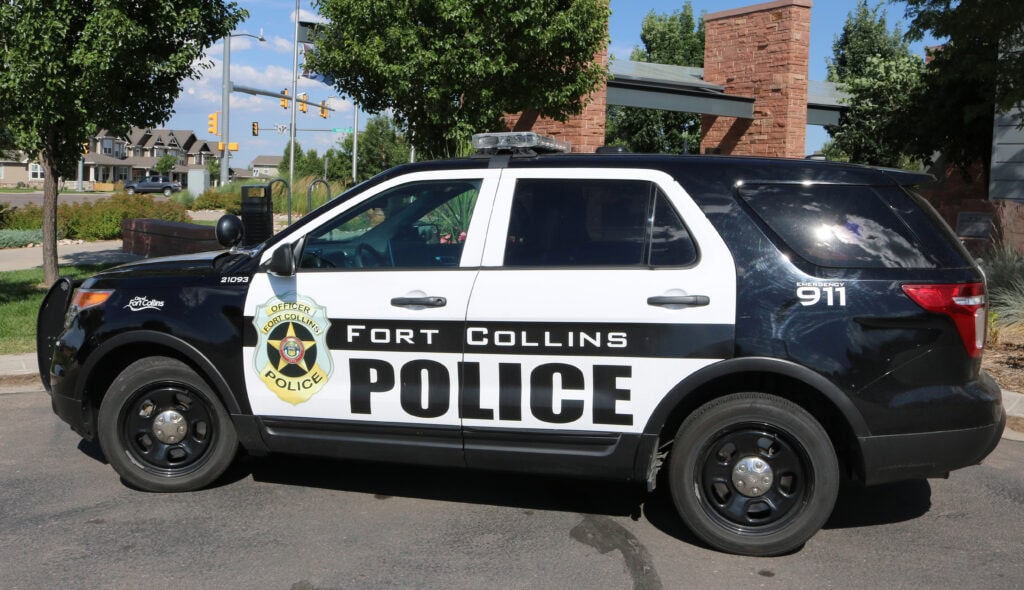
The FCPS vision is to make Fort Collins the safest community in the nation. At the end of the presentation, Chief of Police Jeff Swoboda said, “Go create the best high-risk team in the country, we need this here.”
In Larimer County, 40% of homicides were related to intimate partner violence.
Detective Brandon Wootan first learned about DVHRT while working as a detective in the Criminal Investigations Division at the Helena Police Department in Montana. The department received a grant to create a multi-disciplinary team specializing in domestic violence. He led the formation of the team, with transformative results.
A few years later, his family decided to move to Colorado and he joined the FCPS. While training as a cadet in the police academy, he realized there wasn’t a specialized team for domestic violence in Fort Collins. He became passionate about changing that after receiving a call while assigned to the patrol division that changed his life – it was a domestic violence incident with severe strangulation injury that involved several child witnesses. Without DVHRT, he knew cases like this likely wouldn’t receive escalated attention unless ending in a major felony like homicide or sexual assault. He didn’t want to risk that outcome.
“I think to create change, you need to have someone within an institution who really wants it to happen – a squeaky wheel from the sworn ranks,” he explained. “But you also need incredible leaders. And I will forever be grateful for the FCPS leadership support.”
In August 2023, after comprehensive evaluation, the DVHRT proposal was officially approved and FCPS was able to secure federal funding for the formation of the team and implementation of evidence-based lethality assessment for use by its officers. At the time, a 10-year lookback on the data showed that 40% of homicides in Larimer County were intimate partner related. The team’s mission was critical.

Systemic change largely comes down to one thing: education.
A foundational step in forming DVHRT was reaching out to stakeholders, and the first meeting was with Crossroads Safehouse. “There was already a good relationship between FCPS and Crossroads,” explained Detective Brandon Wootan, emphasizing the importance of this partnership. “I have to give a lot of credit to Britta Davis (FCPS Head of Victims Services) and Stacie Sutter (Crossroads Program Director), who had already established a protocol to connect victims of domestic violence on-scene to advocates that can provide support. Having that in place made the transition to DVHRT so much easier.”
The next crucial step was selecting a lethality assessment – which is a more complicated than it may sound. FCPS needed an assessment that was evidence-based so it could be used in court to inform bond decisions. This led them to the Geiger Institute, a national initiative dedicated to ending domestic violence homicides, and rooted in research which “shows that many domestic violence homicides are predictable; and if they are predictable, they are preventable.” FCPS decided to use the DA-LE (Danger Assessment for Law Enforcement) – an evidence-based lethality assessment developed using research from the Geiger Institute that identifies victims at the highest risk of intimate partner homicide and near-lethal assault.

In August 2024, FCPS began working with the Geiger Institute to complete the implementation of DVHRT and the DA-LE. The identification of risk is only the first step – what’s more important is that the risk is effectively addressed. The Institute provided training and technical assistance to police officers, prosecutors and judges. As the DVHRT continued to develop, detectives later received training from Russel Strand, a retired Army CID Special Agent renowned for creating the Forensic Experiential Trauma Interview (FETI) technique, built on the intersection of trauma and policework. The system was primed for change.
But the vision for the team extended far beyond law enforcement. DVHRT was intentionally built as a coordinated community response bringing together professionals across advocacy, prosecution, healthcare, victim services, probation, higher education, and child protection.
Today, the team includes partnerships with Fort Collins Police Services (officers and victim services), Crossroads Safehouse & Services, the 8th Judicial District Attorney’s Office Domestic Violence Unit, Larimer County Pre-Trial Services, Larimer County Probation, SAVA, La Familia, UCHealth’s SANE/FNE Program, Colorado State University Police Department, the CSU Survivor Advocacy and Foundational Education Center, Crawford Child Advocacy Center, and Loveland Police Department officers and victim advocates.
Life-saving impact of DVHRT and DA-LE.
On November 1, 2024, FCPS officially rolled out DVHRT and DA-LE.
The impact was astounding. “In the first year of the team, we saw a lot of big wins,” Detective Brandon Wootan recounts. “We were really seeing a shift – not just in how the police department was handling domestic violence – but really how the whole system was responding.” Prior to Detective Brandon Wootan’s departure from FCPS, the team also began staffing cases from Loveland Police Department. Since approximately May 2025, Loveland PD has maintained an active presence within DVHRT and regularly brings cases for multidisciplinary review. While the department has not yet implemented lethality assessment tools, efforts toward that goal are ongoing. Judges started talking about intimate partner violence risks from the bench, the District Attorney office started reflecting points from the DA-LE in bond arguments, and engagement with law enforcement changed. There was a shared risk language.
This systemic change created life-saving impact. In the first year of DVHRT and DA-LE, there were no intimate partner homicides in Larimer County (with prior contact with law enforcement). But Detective Brandon Wootan reminds that you can’t base efficacy just on homicide numbers. “How do you judge the efficacy of the high-risk team? It’s a hard question. You can never know how many lives were saved. You can’t count something that didn’t happen.” And that’s what makes the team so inspiring: success is often invisible – measured by tragedies that are prevented – and endings that are rewritten, empowering victims to escape and end the dangerous cycle of domestic violence.
Brandon Wootan’s transition to the Geiger Institute
Detective Brandon Wootan’s career goal is to help law enforcement better understand trauma and expand the impact of trauma-informed investigative practices. In July 2025, he joined the Geiger Institute as a Project Specialist, helping replicate the success of DVHRT and the DA-LE model developed in Fort Collins in communities across the country. In March 2026, he returned to the field as a sworn investigator with the Domestic Violence Unit at the 8th Judicial District Attorney’s Office.
How can you help?
At the end of our conversation, I asked Detective Brandon Wootan what is the best way that people can support this cause. His answer may surprise you.
“Prepare for if, and when, someone discloses they are experiencing domestic violence.” Providing effective support at the time of disclosure, can be life-changing for a person.
To learn more, and help advocate for education on this topic, explore these resources:
– Domestic Violence Resources – Crossroads Safehouse & Services
– Recommended Reading – Crossroads Safehouse & Services
– Geiger Institute